
HelpLook vs Archbee vs Docsie: Which Knowledge Base Wins?
Choosing a knowledge base platform in 2026 means weighing three very different philosophies. HelpLook is an AI-powered knowledge base and help desk built for no-code self-service portals. Archbee is a knowledge portal platform favored by technical teams for developer and API documentation. Docsie is an AI documentation and training platform that turns raw content into structured, publishable material.
This comparison breaks down where each tool genuinely excels, so you can match the platform to your team's actual workflow instead of a feature checklist.
Quick comparison at a glance
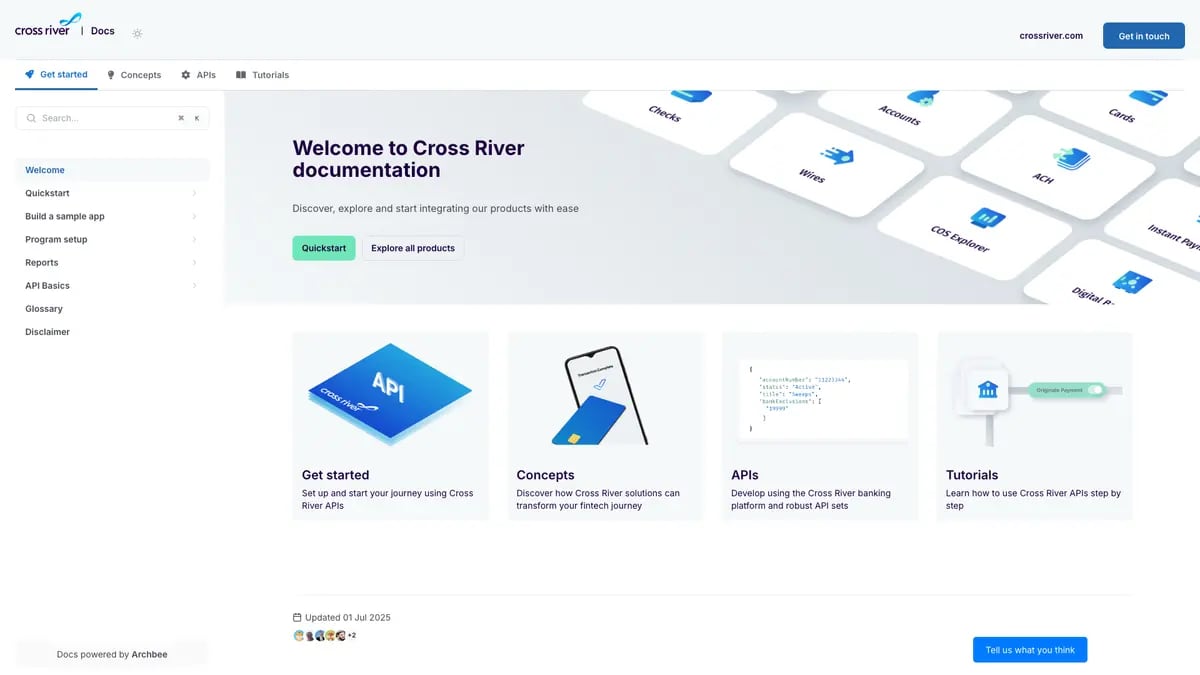
Archbee product interface.
| Criteria | HelpLook | Archbee | Docsie |
|---|---|---|---|
| Primary focus | AI knowledge base + help desk | Knowledge portal for technical docs | AI documentation + training |
| No-code site building | Yes | Yes | Yes |
| AI search and chatbot | Built-in, multi-model support | AI writing and translations | AI chatbot and semantic search |
| Video-to-documentation | Not a core feature | Not a core feature | Native strength |
| Developer/API docs | Supported | Native strength | Supported |
| Custom branding and domains | Yes | Yes | Yes |
| Free tier | Yes | No | No |
| Best fit | Customer and employee self-service | Product, API, and internal docs | Training, onboarding, and multilingual docs |
Where HelpLook stands out
HelpLook is designed for teams that want a working self-service portal without writing code or waiting on engineering. You get a no-code content editor, customizable site branding, and SEO-friendly public pages out of the box.
Its AI layer is the differentiator. HelpLook connects to leading models such as OpenAI, ERNIE Bot, and Azure, powering AI-driven search and a chatbot that answers questions from your own knowledge base. For support teams, that means fewer repetitive tickets and faster answers for customers.
Practical extras matter too: QR code access for physical products, PDF downloads for offline use, third-party integrations, and analytics that show which articles actually reduce support load. With a free tier and plans scaling to enterprise, HelpLook is used by more than 10,000 global brands across customer support, e-commerce manuals, enterprise blogs, and internal knowledge bases.
If your priority is a branded, searchable portal that customers and employees can use immediately, HelpLook is the strongest fit of the three.
Where Archbee stands out
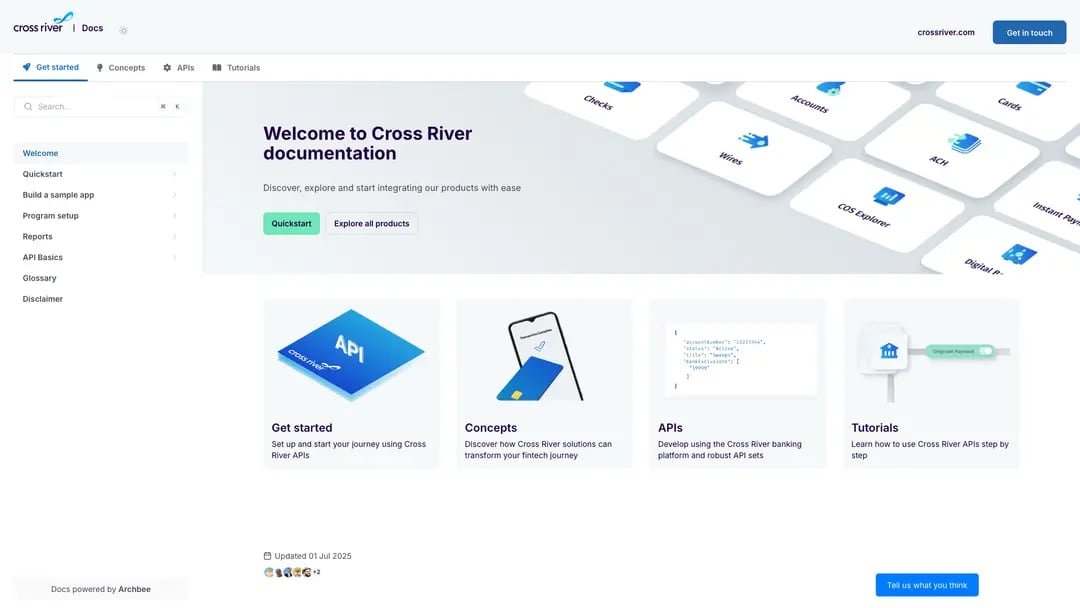
Archbee product interface.
Archbee positions itself as a knowledge portal platform, and for technical teams it delivers. Native branching and drafts make collaborative editing manageable, while reusable content variables and display rules let you tailor the same source material to different audiences.
For developer-facing work, Archbee's strengths are clear: API documentation support, versioning, localization, and integrations with tools like GitHub, GitLab, and Changelog. Custom domains and branding let you publish polished portals for external users.
The proof points are credible. Archbee is backed by Y Combinator, was named #1 Product of the Day on Product Hunt, and is trusted by 3,000+ companies including Make, Rollstack, and Lemonbase. Customer stories highlight measurable gains — Make reported roughly 92% documentation coverage and 5x faster publishing.
One caveat worth noting: some capabilities, such as AI writing assistance and analytics, are sold as paid add-ons on top of the base plan, so budget accordingly.
Where Docsie stands out

Workday logo.
Docsie takes a distinctive angle: it transforms raw content — videos, PDFs, SOPs, and workflow captures — into structured documentation, training materials, knowledge bases, and AI-ready answers.
That video-to-docs capability is genuinely useful for onboarding and compliance teams. Instead of manually writing SOPs from training recordings, you convert them into searchable guides. Docsie also supports multi-language translation across 40+ languages, version control, custom domains, granular permissions, semantic search, and an AI chatbot for customer support.
Docsie positions itself as a scalable alternative to per-seat pricing models like 360Learning and Document360, using an AI credit model that can offer better value as teams grow. It holds a 4.8-star rating from 100+ reviews, is used by 1,000+ companies saving 15+ hours per week, and is trusted by 150+ enterprise teams.
If your content starts as video or spans many languages, Docsie's workflow is hard to match.
How to choose between HelpLook, Archbee, and Docsie
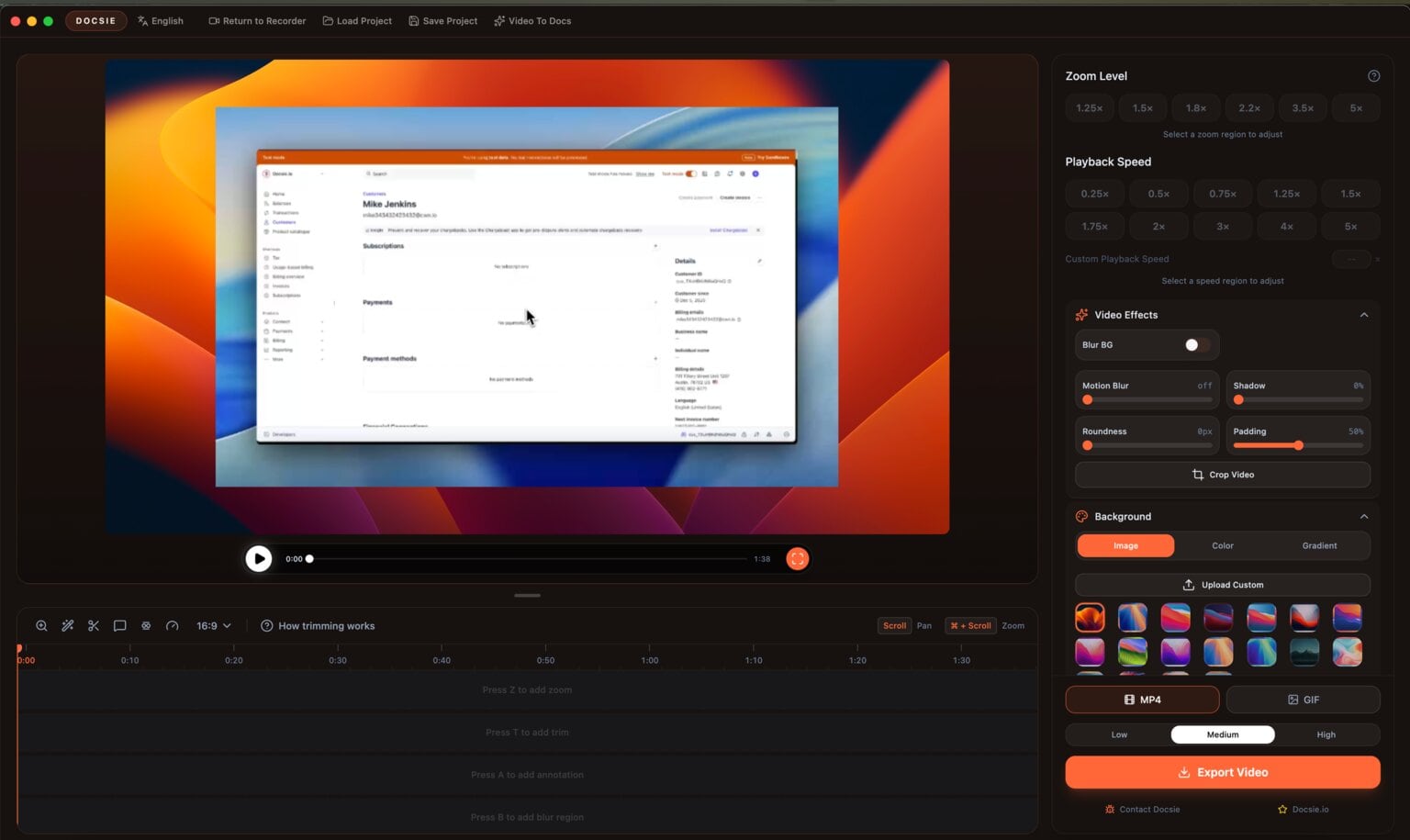
Docsie free screen recorder interface.
Choose HelpLook if:
- You need a no-code, branded self-service portal for customers or employees
- AI search and a chatbot grounded in your own content are priorities
- You want a free tier to start and predictable scaling later
- Your use cases include e-commerce manuals, support centers, or internal knowledge bases
Choose Archbee if:
- Your primary output is developer or API documentation
- You need branching, drafts, reusable variables, and display rules
- You publish product docs, release notes, and internal SOPs to technical audiences
- You are comfortable budgeting for add-ons like AI writing and analytics
Choose Docsie if:
- Your source material is video, PDFs, or recorded workflows
- You need training materials and onboarding guides, not just help articles
- Multi-language publishing across 40+ languages is a requirement
- You want an AI credit model instead of strict per-seat pricing
Pricing considerations
Pricing models differ in ways that affect total cost. HelpLook offers a free tier plus subscription plans that scale with AI credits and resources. Archbee starts around $50/month for three users on the base plan, but AI writing, analytics, API access, and embeddable widgets are add-ons that can push real-world costs to $150–$310/month. Docsie uses an AI credit model designed to avoid per-seat penalties as teams grow.
For a deeper look at how these platforms stack up against other tools, see our comparisons of HelpLook vs Docsie vs DocsBot and HelpLook vs Archbee vs Bloomfire.
Related reading
- HelpLook vs Helpjuice vs Mintlify: Which Knowledge Base Wins in 2026? - Compare HelpLook, Helpjuice, and Mintlify on AI search, pricing, customization, and use cases. Find the right knowledge base for your team in 2026.
- HelpLook vs Helpjuice vs Bloomfire: 2026 Comparison - Compare HelpLook, Helpjuice, and Bloomfire on AI search, customization, pricing, and use cases to pick the right knowledge platform for your team.
- HelpLook vs Helpjuice vs KnowledgeOwl: 2026 Comparison - Compare HelpLook, Helpjuice, and KnowledgeOwl on AI search, knowledge base features, pricing, and ideal use cases. Find the right platform for your team.
Sources and further reading
- Archbee vs Help Scout (2026): Which Is Better? | Docsie - Archbee vs Help Scout: compare features, pricing, and use cases to find the best documentation tool for your team in 2026.
- Archbee vs. Docsie vs. Help Generator Comparison - SourceForge - Compare Archbee vs. Docsie vs. Help Generator using this comparison chart. Compare price, features, and reviews of the software side-by-side to make the best choice for your business.
- Archbee vs HelpDocs Pricing (2026): Plans & Costs | Docsie - Archbee vs HelpDocs pricing compared: real costs, hidden add-ons, and which offers better value in 2026.
FAQ
Is HelpLook a good alternative to Archbee?
It depends on your audience. HelpLook is stronger for customer-facing self-service portals with AI search and a chatbot, while Archbee is stronger for developer and API documentation with branching and versioning.
Does Docsie support video-to-documentation conversion?
Yes. Docsie natively converts videos, PDFs, and workflow captures into structured documentation and training materials, which is a core part of its positioning.
Which platform has a free plan?
HelpLook offers a free tier. Archbee and Docsie do not advertise free plans, though both offer trials.
Which tool is best for multilingual documentation?
Docsie supports translation across 40+ languages, making it a strong fit for global teams. Archbee supports localization, and HelpLook supports multi-language content creation.
Can I use these tools for internal knowledge bases?
Yes. All three support internal knowledge bases, though Archbee and Docsie are particularly common for technical and training-focused internal documentation.
Conclusion
There is no single winner — only the right fit. HelpLook wins when you need a no-code, AI-powered self-service portal with a free starting point. Archbee wins when your documentation is technical, versioned, and developer-facing. Docsie wins when your content begins as video or must be published in many languages.
Start by mapping your primary content type and audience. That single decision will point you to the platform that saves the most time and delivers the best experience for your users. For more side-by-side analysis, explore our HelpLook vs KnowledgeBase vs Docsie comparison.