
Top 10 AI Knowledge Base & Customer Support Automation Platforms 2026
Customer support teams in 2026 face a familiar problem at a larger scale: ticket volumes keep rising, but headcount does not. The platforms that win are the ones that combine a searchable knowledge base with AI that can actually resolve requests, not just answer questions. This guide ranks the top 10 AI knowledge base and customer support automation platforms based on hands-on evaluation criteria, real pricing data, and verified capabilities.
How We Evaluated These Platforms
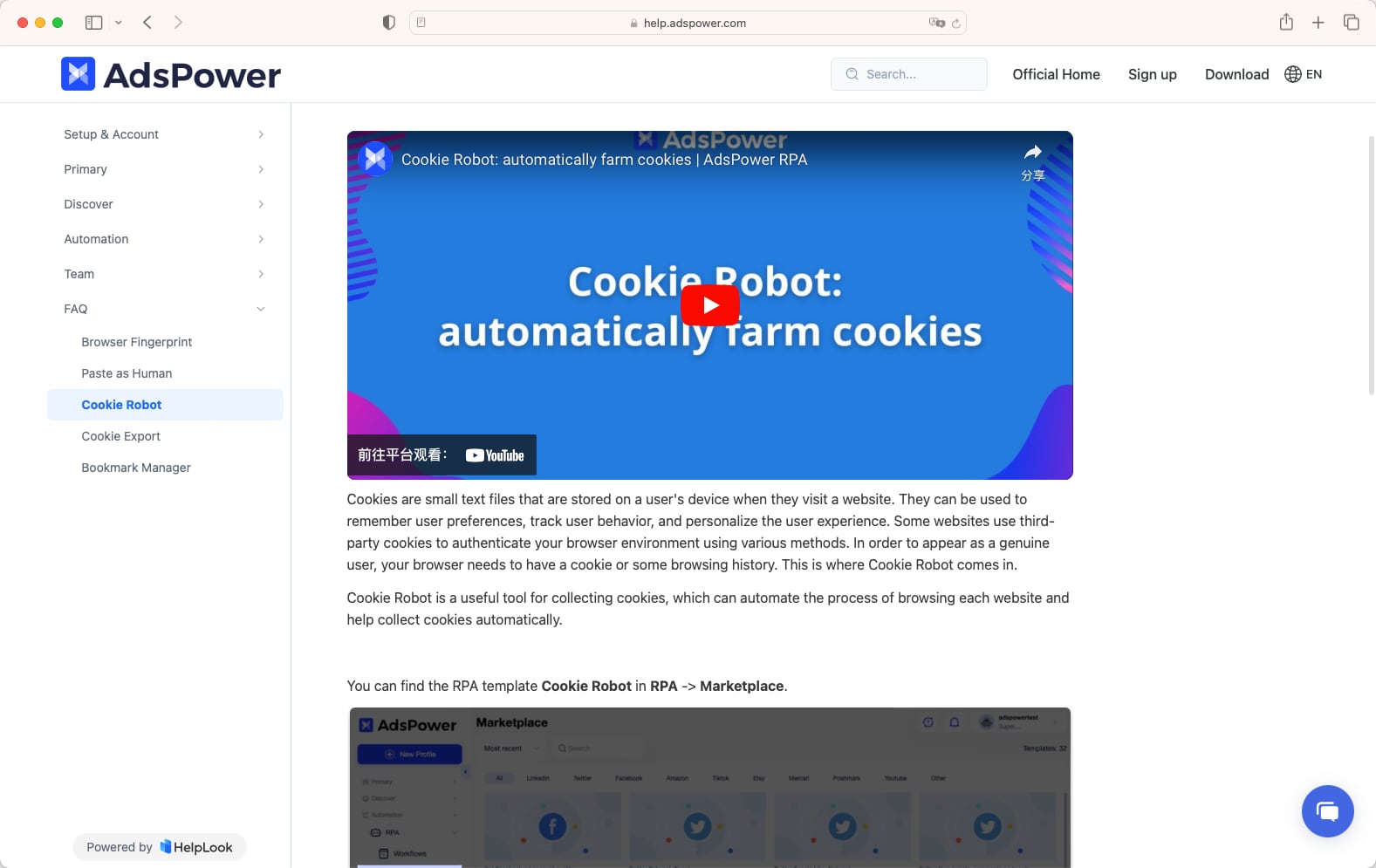
HelpLook product interface.
We assessed each platform across seven dimensions:
- Knowledge reach: Can the AI read from multiple sources (help center, Confluence, Notion, past tickets, SharePoint, Google Drive)?
- Resolution capability: Does it only retrieve answers, or can it execute actions like processing returns, resetting passwords, or updating records?
- Escalation quality: When AI cannot resolve a request, does the human agent receive full context, account data, and suggested next steps?
- Self-service experience: How well does the customer-facing portal and chatbot handle natural language queries?
- Analytics and gap detection: Does the platform show which questions drive tickets and where content is missing?
- Integrations: How many helpdesks, CRMs, and business tools does it connect with?
- Pricing transparency and scalability: Are costs predictable as volume grows?
We prioritized platforms that publish pricing, offer real customer proof, and demonstrate measurable deflection or resolution rates.
The Top 10 Platforms
HelpLook product interface.
1. DocsBot
Best for: Teams that need a custom AI agent trained on their own documentation and support content without heavy engineering.
DocsBot is an AI-powered platform that lets businesses create custom AI agents trained on their own knowledge base, documentation, and support content. It serves customer support, sales, and internal teams by providing instant, accurate answers and automating actions across business tools and workflows.
Key capabilities:
- Training on over 28 source types, including websites, documents, helpdesk tickets, Notion, and Confluence
- No-code chat widget for websites and help centers
- Smart escalation to human agents with conversation context
- Multilingual support
- Integrations with 7,000+ apps via Zapier
- APIs for custom development
Use cases: AI customer support chatbots that reduce repetitive inquiries, pre-sales chatbots that capture leads, and internal knowledge assistants for teams.
Pricing: Free plan available; business plans up to $499/month with annual discounts.
Evidence: Trusted by 75,000+ users and 3,000+ businesses, with case studies highlighting improvements in support efficiency and lead capture.
Considerations: DocsBot excels at training on diverse sources and deploying quickly. Teams needing deep helpdesk ticketing workflows may pair it with a dedicated help desk.
2. Enjo
Best for: Enterprises that need an AI support agent capable of executing actions across systems.
Enjo is an AI Support Agent that resolves customer service requests end to end and escalates with full context when it cannot. It runs standalone or inside existing helpdesks like Salesforce, Zendesk, Jira, and ServiceNow.
Key capabilities:
- AI Actions that create, look up, and update records in Jira, ServiceNow, and Salesforce
- Unlocks accounts and provisions access in Okta
- One knowledge index covering Confluence, SharePoint, Google Drive, Notion, Guru, and past tickets
- Escalation with full conversation, account context, and suggested next steps
- Multi-step workflows with defined fallbacks
- Bulk testing and sandbox environments for pre-production validation
Pricing: Free tier includes 200 AI replies/month. Starter is $95/month for 1,000 replies; Standard is $295/month for 3,000 replies; additional replies are $0.05 each. Enterprise is custom.
Evidence: Aptean, an ERP provider with 3,500+ employees, resolves 300K+ cases annually with Enjo AI, 37% fully by AI without human involvement.
Considerations: Enjo is configured as an agent first, not a chat widget. It is best for teams ready to let AI take real actions.
3. Fin (Intercom)
Best for: Teams already using Intercom or those wanting an AI agent that layers onto multiple helpdesks.
Fin is an AI agent for customer service messaging, sold standalone on other helpdesks and bundled with the Intercom suite. It runs on Intercom, Salesforce, HubSpot, Freshworks, Dixa, Front, Zoho, Sprinklr, and Gorgias.
Key capabilities:
- Outcome-based billing: one outcome per conversation, no charge when conversation passes to a human
- Procedures for multi-step work with configured handoffs
- Pre-launch validation through simulations and regression tests
- Handles tickets, cases, emails, live chat, WhatsApp, and SMS
Pricing: $0.99 per outcome on standalone path; bundled pricing with Intercom suite.
Evidence: Fin is widely adopted across Intercom's customer base and integrates with major helpdesks.
Considerations: Outcome-based pricing can be cost-effective at high resolution rates but requires careful volume forecasting.
4. Zendesk AI Agents
Best for: Organizations already using Zendesk that want native AI automation.
Zendesk AI Agents extend the Zendesk helpdesk with AI-powered resolution and agent assistance.
Key capabilities:
- Native integration with Zendesk ticketing
- AI-powered answers from knowledge base
- Agent copilot features for reply drafting and summarization
- Analytics on AI performance and ticket deflection
Pricing: $19/agent/month for AI Agents add-on.
Evidence: Zendesk is used by over 100,000 organizations globally.
Considerations: Best value for existing Zendesk customers; less flexible for teams on other helpdesks.
5. Tidio (Lyro)
Best for: Small to mid-sized businesses wanting an affordable AI chatbot with helpdesk integration.
Tidio combines live chat, chatbots, and AI-powered Lyro to automate customer conversations.
Key capabilities:
- Lyro AI resolves common questions from knowledge base
- Standalone or integrates with Zendesk, Salesforce, and other helpdesks
- Multichannel support including website, email, and social
- Free plan available
Pricing: Free, then $24.17/month.
Evidence: G2 rating of 4.6/5; widely used by SMBs.
Considerations: Strong for SMBs; enterprise teams may need more advanced routing and analytics.
6. Ada
Best for: Enterprises needing a standalone AI agent with helpdesk connectors.
Ada provides an AI-powered customer service automation platform that resolves inquiries across channels.
Key capabilities:
- Own agent workspace plus helpdesk connectors
- Multilingual support
- Analytics and reporting
- No-code automation builder
Pricing: Not published; custom pricing.
Evidence: G2 rating of 4.6/5.
Considerations: Pricing opacity may require vendor negotiation; strong for large-scale deployments.
7. Forethought by Zendesk
Best for: Teams wanting AI automation that works with Zendesk or other helpdesks.
Forethought provides AI-powered triage, agent assist, and self-service automation.
Key capabilities:
- AI triage and routing
- Agent assist with suggested replies
- Self-service AI answers
- Works with Zendesk and other helpdesks
Pricing: Not published; custom pricing.
Evidence: G2 rating of 4.3/5.
Considerations: Strong for triage and agent assist; pricing requires vendor contact.
8. Freshdesk (Freddy AI)
Best for: Teams wanting an all-in-one helpdesk with built-in AI.
Freshdesk is an agentic AI customer service platform that unifies AI and human agents.
Key capabilities:
- Freddy AI handles up to 80% of routine tickets
- Omnichannel support (email, chat, phone, social)
- AI copilot for agents
- Self-service with smart article suggestions
- Advanced ticketing and automation
Pricing: Growth $18/agent/month; Pro $59/agent/month; Enterprise $95/agent/month.
Evidence: Trusted by 73,000+ brands; 83% faster response time reported.
Considerations: Comprehensive suite; may be more than needed for teams focused only on knowledge base AI.
9. Gorgias
Best for: Ecommerce businesses needing AI-powered support automation.
Gorgias is an ecommerce-first helpdesk with AI automation for order tracking, returns, and product questions.
Key capabilities:
- Ecommerce integrations (Shopify, Magento, BigCommerce)
- AI-powered responses for common queries
- Ticket automation and routing
- Revenue-focused analytics
Pricing: $10/month for 50 tickets.
Evidence: G2 rating of 4.6/5; popular among ecommerce brands.
Considerations: Excellent for ecommerce; less suited for B2B SaaS or internal knowledge management.
10. Chatbase
Best for: Teams wanting a lightweight AI chatbot trained on their content.
Chatbase lets you build custom AI chatbots trained on your documents, websites, and help content.
Key capabilities:
- Train on documents, websites, and text
- Embed on website or Slack
- No-code setup
- API access
Pricing: Free, then $40/month.
Evidence: G2 rating of 4.8/5.
Considerations: Simple and affordable; lacks advanced helpdesk features like ticketing and routing.
Comparison Table
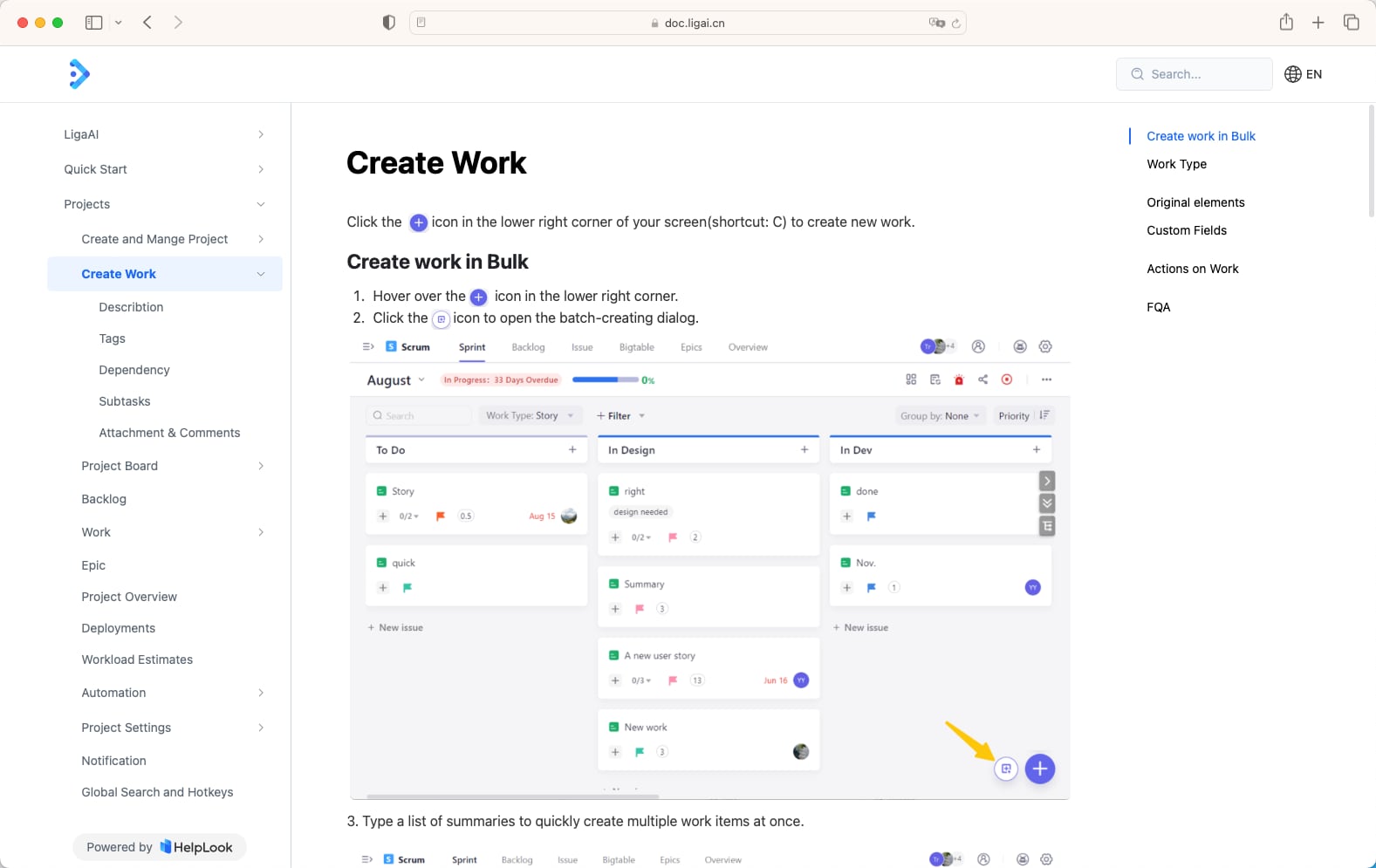
HelpLook product interface.
| Platform | Best For | Starting Price | Key Strength |
|---|---|---|---|
| DocsBot | Custom AI agents on your content | Free; up to $499/mo | 28+ source types, no-code widget |
| Enjo | Action-executing AI agents | Free; $95/mo | AI Actions, deep integrations |
| Fin | Multi-helpdesk AI agent | $0.99/outcome | Outcome-based pricing |
| Zendesk AI Agents | Zendesk users | $19/agent/mo | Native Zendesk integration |
| Tidio (Lyro) | SMBs | Free; $24.17/mo | Affordable, multichannel |
| Ada | Enterprises | Custom | Standalone agent workspace |
| Forethought | Zendesk/other helpdesks | Custom | AI triage and agent assist |
| Freshdesk | All-in-one helpdesk | $18/agent/mo | Freddy AI, omnichannel |
| Gorgias | Ecommerce | $10/mo | Ecommerce integrations |
| Chatbase | Lightweight chatbot | Free; $40/mo | Simple setup, affordable |
How to Choose the Right Platform
HelpLook product interface.
If you need AI that can take actions: Enjo and Fin lead with action execution and outcome-based pricing.
If you want to train AI on diverse content sources: DocsBot supports 28+ source types and deploys quickly without engineering.
If you are already on Zendesk: Zendesk AI Agents and Forethought offer native integration.
If you are an ecommerce brand: Gorgias is purpose-built for order and return automation.
If you need an all-in-one helpdesk: Freshdesk combines ticketing, AI, and omnichannel support.
If you want a lightweight, affordable chatbot: Chatbase and Tidio offer free tiers and simple setup.
For teams also evaluating knowledge base platforms with no-code editing and SEO-friendly portals, HelpLook is worth considering as a complementary tool for building self-service documentation that feeds into these AI systems. You can compare options in guides like HelpLook vs Stonly vs DocsBot or HelpLook vs Document360 vs DocsBot.
Related reading
- HelpLook vs Mintlify vs Stonly: Which Platform Fits? - Compare HelpLook, Mintlify, and Stonly on audience, AI search, no-code editing, SEO, integrations, and pricing to pick the right knowledge platform.
- HelpLook vs Stonly vs DocsBot: Which AI Knowledge Base Wins? - Compare HelpLook, Stonly, and DocsBot on AI search, chatbots, no-code editing, integrations, and pricing to choose the right AI knowledge base for support.
- HelpLook vs Docsie vs Zendesk: Best Knowledge Base in 2026 - HelpLook vs Docsie vs Zendesk compared: AI knowledge base, help desk, documentation, pricing, and support fit. Find the right platform for your team.
Sources and further reading
- 10 best AI tools for customer support in 2026 - Freshworks - Check out the 10 best AI customer support tools for service teams in 2026. Compare the features, pricing, pros, cons, and strengths to pick the right tool.
- AI Chatbot for Customer Service: 10 Tools Ranked (2026) - Compare 10 AI chatbots for customer service on what each one resolves, what it costs, and what its escalation carries. Start free at enjo.ai.
- 12 Best AI Knowledge Base Software for Support Teams in 2026 - Your support team is drowning in tickets that customers could easily answer themselves if only they could find the right information. Meanwhile, your agents waste hours answering the same questions repeatedly instead of tackling complex issues that truly need their expertise.
Most knowledge base software promises to solve this problem, but here's what support teams really need from an AI-powered knowledge base:
- Customer-facing AI that actually works: Your users should be able to ask questio
FAQ
What is the difference between an AI knowledge base and a customer support automation platform?
An AI knowledge base focuses on organizing and retrieving information using AI search and chatbots. A customer support automation platform goes further by automating ticket routing, agent assistance, and sometimes executing actions like refunds or account updates.
Can these platforms replace human agents entirely?
No. Most platforms aim to deflect 30-60% of routine tickets, escalating complex issues to humans with full context. Full replacement is rare and often impractical.
How do I measure ROI from AI support automation?
Track ticket deflection rate, average resolution time, customer satisfaction (CSAT), and cost per resolution. Compare these before and after implementation.
Do these platforms support multiple languages?
Many do, including DocsBot, Ada, and Freshdesk. Check each vendor's language list if you support global customers.
What is outcome-based pricing?
Outcome-based pricing charges per resolved conversation rather than per seat or per message. Fin uses this model at $0.99 per outcome.
Conclusion
The AI knowledge base and customer support automation market in 2026 offers strong options for every team size and budget. DocsBot leads for teams wanting custom AI agents trained on their own content with minimal setup. Enjo and Fin excel at action-executing AI agents for enterprises. Zendesk AI Agents and Forethought are natural fits for Zendesk users. Freshdesk provides a comprehensive all-in-one suite, while Gorgias dominates ecommerce. Chatbase and Tidio serve teams needing affordable, lightweight chatbots.
The right choice depends on your existing stack, the complexity of your support workflows, and whether you need AI that only answers questions or AI that resolves requests end to end. Start with a free tier or trial, measure deflection and resolution rates, and scale from there.
For deeper comparisons, see HelpLook vs Mintlify vs Stonly and HelpLook vs Docsie vs Zendesk.