
Bloomfire Review 2026: AI Knowledge Management Tested
Bloomfire has earned a reputation as a top-tier AI-powered knowledge management platform, especially among Global 2000 companies like Novonesis and Regeneron. But does it live up to the hype for your team? This review draws on verified user feedback from G2 and Gartner, the company’s own benchmark data, and hands-on analysis of its core capabilities. We’ll break down what Bloomfire gets right, where it stumbles, and who should — and shouldn’t — invest in it.
What Is Bloomfire?

Bloomfire Review 2026: AI Knowledge Management Tested product interface and feature overview.
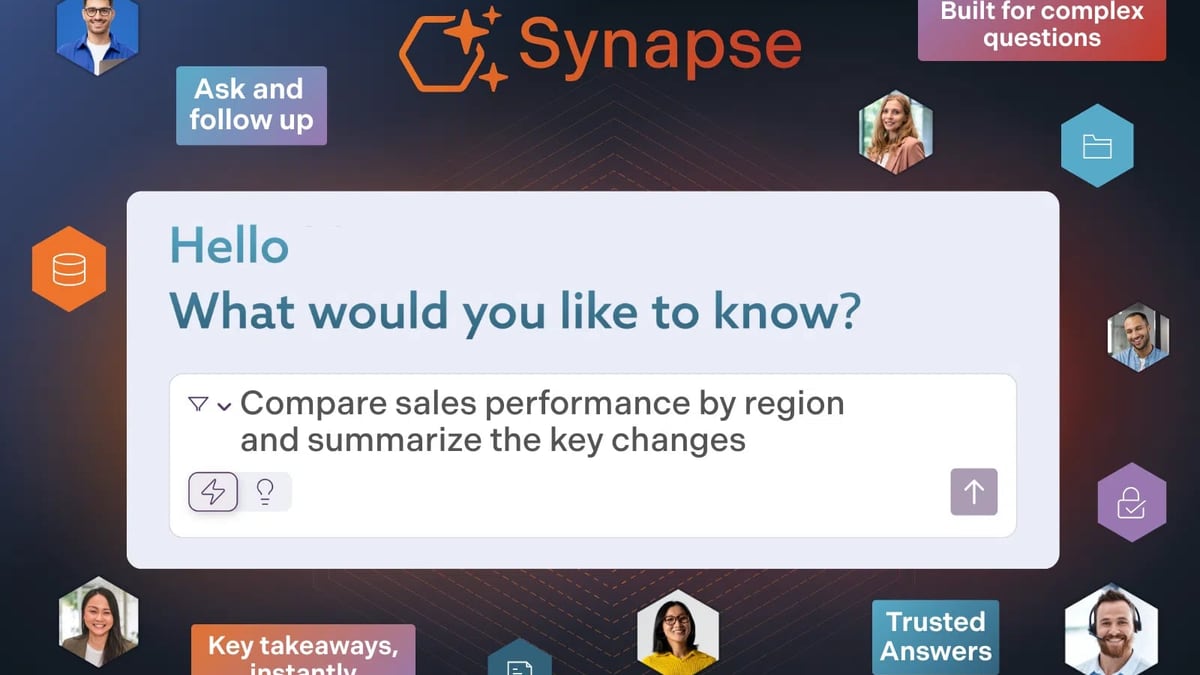
Bloomfire is an enterprise knowledge management system designed to turn scattered files, wikis, and tacit expertise into a connected, searchable intelligence layer. Unlike static document repositories, it uses AI to understand what your content means, not just what it says. Key differentiators include automatic duplicate and contradiction detection, an AI-assisted authoring workflow, and a governance model that lets you verify knowledge without extra tools.
Core Capabilities and AI-Powered Features
- AI-Powered Search & Discovery: Semantic search goes beyond keywords to deliver contextually accurate answers from PDFs, videos, and embedded files.
- Self-Healing Knowledge Base: The platform flags outdated, duplicate, or conflicting content and surfaces it for review.
- Author Assist: AI-powered writing aids help teams draft, tag, and structure articles faster.
- Learn & Confirm: A verification layer that ensures employees read and understand critical updates, not just click through.
- Enterprise Governance: Role-based permissions, version control, and compliance features (SOC 2, GDPR, SSO, SCIM).
Bloomfire vs. Traditional Knowledge Bases: Where It Shines
Bloomfire Review 2026: AI Knowledge Management Tested product interface and feature overview.
AI-Powered Search and Discovery
Bloomfire’s search isn’t just a better search bar — it’s a retrieval engine that understands intent. According to Bloomfire’s own data, the platform delivers a 72% search conversion rate, meaning nearly three-quarters of searches result in a relevant article or answer. For large organizations with tens of thousands of documents, this dramatically reduces time spent hunting for information.
Self-Healing and Governance
Traditional knowledge bases rot silently. Bloomfire’s self-healing mechanisms actively scan for duplicate entries, contradictory advice, and stale content. The Learn & Confirm module goes further: authors can embed comprehension checks into key updates and track who actually digested them — a feature that trainers and compliance teams love.
Collaboration and Tacit Knowledge Capture
Bloomfire treats knowledge as a conversation, not a library. Q&A workflows allow employees to ask questions in natural language and get answers sourced from the entire knowledge base — including previously uncaptured expertise in file attachments. User reviews on Gartner Peer Insights frequently highlight the platform’s ability to index entire user manuals and surface answers directly from source documents, saving hours of manual searching.
Ideal Use Cases and Industry Fit
Employee Onboarding and Training
With Learn & Confirm, managers can assign onboarding materials and confirm that new hires actually absorbed critical policies. One trainer quoted on Gartner praised the ability to “ensure content updates are being read and understood … without extraneous means.”
Sales Enablement and Customer Support
Bloomfire is a natural fit for teams that need fast, accurate answers under pressure. A major credit union cited in Bloomfire’s case studies reported $469,000 in annual time savings and a 13% reduction in call volumes after deploying the platform. For support reps, the AI often surfaces the exact procedure or product spec before they finish typing the question.
Research and Insights Teams
Analysts who compile market intelligence, survey data, and competitive briefs can publish findings directly into a single source of truth. The platform’s group permissions ensure sensitive material reaches only the right departments, a capability that G2 reviewers consistently highlight as critical for multi-entity organizations.
Bloomfire Limitations and Challenges

Bloomfire Review 2026: AI Knowledge Management Tested product interface and feature overview.
Pricing Transparency and Enterprise Budget
Bloomfire doesn’t offer public pricing — you have to request a quote. This makes benchmarking difficult for smaller teams. The platform is clearly designed for mid-market and enterprise deployments, and the feature set can feel like overkill for a team of 20 that just needs a simple wiki. If you’re in that camp, our Top 10 AI Knowledge Base Software ranking lists lightweight alternatives starting at $7 per month.
Dependency on Content Curation
Even the most advanced AI engine can’t compensate for a messy knowledge base. Several G2 reviewers note that Bloomfire’s results are only as good as the underlying content. Without a dedicated curation effort — consistent tagging, regular cleanup — you’ll still get irrelevant returns.
Tacit Knowledge Capture Beyond Q&A
While Q&A threads capture informal know-how, systematic capture of expertise (e.g., from retiring specialists) may require supplementary interviewing or recording tools. Bloomfire is strong at organizing existing knowledge, but building that foundational content still demands human effort.
Real-Time Analytics Need BI Integrations
Out-of-the-box engagement dashboards are solid, but real-time streaming dashboards and data fabric capabilities still require a complementary BI stack. If you need live, cross-channel analytics, plan to connect Bloomfire to your existing data warehouse or Power BI instance.
User Reviews and Ratings from G2 and Gartner
Verified users on G2 consistently praise Bloomfire’s intuitive interface, powerful search, and responsive customer support. Recurring positive themes include:
- Single source of truth with granular permissions — users can serve entire frontline staff without flooding them with irrelevant content.
- Embedded file indexing — answers pulled directly from PDFs, slide decks, and workbooks.
- Learn & Confirm — called “one of the most exciting recent releases” by a trainer reviewer.
The main wish-list items among detractors include a more functional table of contents (some users miss the old navigation) and more transparent pricing.
On Gartner Peer Insights, Bloomfire holds a favorable overall rating (4.5+ out of 5 across 43 reviews as of this writing), with consistent praise for its centralized knowledge, robust permissions model, and AI-assisted authoring.
Pricing Signals and How to Get a Quote
Bloomfire does not publish per-seat pricing because each deployment is tailored. Based on analyst reports and user reviews, expect an enterprise-oriented cost structure that makes sense for teams of 100+ users who will actively generate and consume content. Small to mid-sized organizations should budget carefully and factor in the internal effort required for content curation. To get a quote, you’ll need to go through a discovery call and demo.
Bloomfire vs. Alternatives: How It Compares
Bloomfire Review 2026: AI Knowledge Management Tested product interface and feature overview.
| Platform | Best For | Pricing Model |
|---|---|---|
| Bloomfire | Large enterprises needing AI-driven semantic search and governance | Custom quote |
| eGain AI Knowledge Hub | Contact center and CX operations with MCP support | Custom quote |
| Microsoft SharePoint + Copilot | Microsoft 365-centric environments | Per-user licensing |
| HelpLook | Small to mid-sized teams wanting AI search without bloat | Starts at $7/mo |
| Guru AI Knowledge Hub | Mid-sized teams requiring real-time verification workflows | $25/seat/mo and up |
If your team is already embedded in Microsoft 365, SharePoint + Copilot may feel like a natural extension. However, Bloomfire often complements SharePoint by adding the intelligent search and content governance layer that SharePoint lacks on its own. For a thorough side-by-side breakdown, see our HelpLook vs Bloomfire comparison, which evaluates these two popular AI knowledge platforms across price, ease of use, and enterprise readiness.
Decision Criteria: Is Bloomfire Right for You?
Bloomfire is an excellent choice if:
- You have 100+ employees spread across multiple departments.
- Knowledge silos are hurting productivity and decision-making.
- You need robust governance, version control, and compliance.
- Your teams require AI-powered search that reads inside PDFs, videos, and embedded attachments.
- You’re willing to invest in internal curation champions.
Look elsewhere if:
- You’re a startup or small team with a tight budget.
- Your knowledge base needs are limited to a simple FAQ or developer docs.
- You require transparent, per-seat pricing from day one.
Related reading
- Top 10 AI Chatbot Software Products 2026: Ranked & Reviewed - We tested and ranked the best AI chatbot platforms for business in 2026. Compare pricing, automation, integration, and use cases from ChatBot.com, Intercom, Drift, and more.
- ChatBot.com Review 2026: Is the AI Chatbot Platform Worth It? - In-depth ChatBot.com review: test results on flow builder, AI accuracy, pricing ($19–$499/mo), pros & cons, and ideal use cases. Read before signing up.
- HelpLook vs Documentation.AI vs Zendesk: AI Knowledge Showdown 2026 - HelpLook vs Documentation.AI vs Zendesk: Compare AI knowledge platforms on pricing, developer docs, customer service AI, and ease of use to find the best fit.
Frequently Asked Questions
Does Bloomfire offer a free trial?
Yes, potential customers can request a personalized demo and, in some cases, a proof-of-concept trial. It’s not a self-service free tier, though.
Can Bloomfire integrate with Salesforce and Slack?
Yes. Bloomfire offers deep integrations with Salesforce, Slack, Microsoft Teams, Zendesk, and many other business platforms to surface knowledge inside existing workflows.
How does Bloomfire handle content in videos and images?
The platform uses AI to transcribe video and index any spoken content, making it searchable along with text documents and PDFs. Image recognition is not a primary feature, but embedded text in images can often be indexed.
What makes Bloomfire different from SharePoint?
SharePoint excels at document storage and versioning. Bloomfire adds a semantic search and self-healing governance layer that transforms static files into dynamic, AI-recommended knowledge. Many enterprises use both together.
Is Bloomfire suitable for remote teams?
Absolutely. As a cloud-native platform, it’s built for distributed access. Group permissions and the centralized search help remote employees find verified answers without pinging colleagues.
Conclusion: Should You Invest in Bloomfire?
Bloomfire delivers on its promise of converting chaotic content libraries into a living, searchable knowledge hub. Its AI-powered search, self-healing governance, and enterprise-grade security make it a compelling pick for large organizations that can justify the custom price tag. The platform’s measurable impact — a 72% search conversion rate, $469,000 in annual savings for a credit union, and glowing user reviews — underscores real-world value.
That said, it’s not for everyone. Smaller teams and budget-conscious buyers will likely find more value in lighter-weight alternatives. At HelpLook, we test and compare AI knowledge platforms continuously to help you make the right call. If you’re still on the fence, start by exploring our in-depth comparison of HelpLook and Bloomfire or browse our full ranking of the year’s best AI knowledge base software.