
HelpLook vs Mintlify vs Zendesk: Which Knowledge Platform Fits Your Team?
Choosing between an AI knowledge base, an agent-native documentation platform, and a full customer service suite can feel like comparing tools from three different worlds. HelpLook, Mintlify, and Zendesk all promise to reduce support load and improve self-service, but they optimize for different teams, workflows, and outcomes.
This comparison breaks down where each platform excels, where it falls short, and how to match the right tool to your use case.
Quick Verdict: Who Should Choose What
Mintlify product interface.
- Choose Mintlify if you build developer documentation or agent-facing knowledge that must stay current automatically.
- Choose Zendesk if you need a complete omnichannel customer service platform with ticketing, AI agents, workforce management, and enterprise compliance.
- Choose HelpLook if you want a no-code, SEO-friendly knowledge base and help center with AI search and chatbot capabilities without the operational weight of a full service suite.
Platform Positioning at a Glance
Mintlify product interface.
| Criteria | HelpLook | Mintlify | Zendesk |
|---|---|---|---|
| Core focus | AI knowledge base and help desk | Agent-native documentation platform | Omnichannel customer service platform |
| Primary audience | Support teams, e-commerce, enterprises | Developer relations, technical writers, AI agent builders | Customer service teams, contact centers |
| Key strength | No-code self-service portals with AI search | Self-updating docs for humans and AI agents | End-to-end service resolution at scale |
| AI approach | AI search, chatbot, multi-model integration | Agent-native content, Visibility for AI vs human readers | Self-improving AI agents with Resolution Learning Loop |
| Best for | Self-service portals, product manuals, internal KBs | API docs, developer portals, agent infrastructure | High-volume support operations, enterprise service |
Mintlify: The Agent-Native Documentation Choice
Mintlify product interface.
Mintlify positions itself as knowledge infrastructure for the agent era. More than 20,000 companies, including Anthropic, Coinbase, HubSpot, and AT&T, use it to power developer and agent experiences.
Where Mintlify Excels
Mintlify's standout capability is self-updating documentation. Traditional docs decay as products change, but Mintlify automates updates so content stays aligned with the current product state. This matters most for teams shipping frequently.
The platform also introduces a Visibility component that lets authors write separate content for human readers and AI agents. As more companies expose documentation to LLM-powered assistants, this dual-audience authoring becomes a genuine differentiator rather than a gimmick.
Mintlify supports collaborative workflows with drafts, branch locking, and a visual editor. Its Update component structures changelogs and release notes in a timeline format with RSS feed generation, which developer audiences tend to appreciate.
Where Mintlify Falls Short
Mintlify is not a help desk. If you need ticketing, live chat routing, or omnichannel support across email, voice, and social messaging, you will need another tool alongside it. Its focus on documentation and agent infrastructure means customer service workflows are outside its scope.
For non-technical teams, Mintlify's developer-oriented interface and concepts may require more ramp-up time than a no-code knowledge base builder.
Zendesk: The Full-Service Resolution Platform
Zendesk is the most established player in this comparison. With 22,000+ AI customers, 830 million AI interactions, and 4.8 billion resolutions delivered, it has scale and enterprise credibility that newer platforms cannot match. Gartner named it a Leader in the 2025 Magic Quadrant for CRM Customer Engagement Center.
Where Zendesk Excels
Zendesk's core value proposition is moving beyond deflection to real resolutions. Its AI agents learn from every interaction through the Resolution Learning Loop, and the platform reports up to 80% automation on eligible inquiries.
The unified Resolution Platform connects data and workflows across systems, which matters for enterprises running multiple tools. Native workforce management, quality assurance, and analytics give service leaders operational control that documentation-focused tools do not offer.
For regulated industries, Zendesk's SOC 2 and ISO 27001 compliance and Fortune 100/500 trust record reduce procurement friction.
Where Zendesk Falls Short
Zendesk's breadth comes with complexity and cost. Small teams often find the platform heavier than they need for a simple knowledge base or help center. Implementation, configuration, and ongoing administration typically require dedicated resources.
Zendesk's knowledge base capabilities are solid but secondary to its ticketing and AI agent features. Teams that only need a self-service portal may pay for functionality they will never use.
HelpLook: The No-Code Knowledge Base and AI Help Desk
HelpLook product interface.
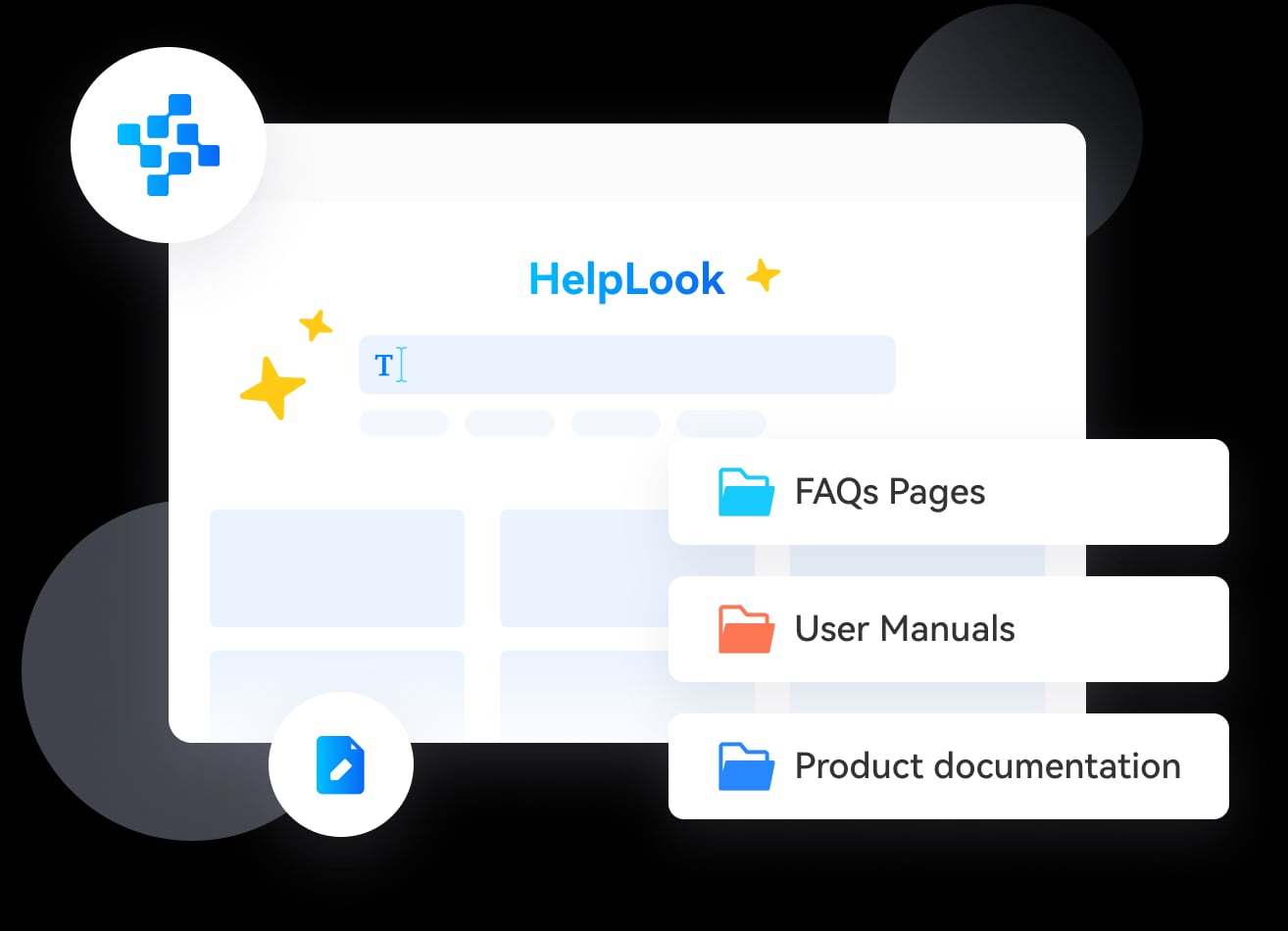
HelpLook focuses on making self-service portals accessible to teams without coding resources. Over 10,000 global brands use it for customer support knowledge bases, e-commerce product manuals, enterprise blogs, and internal knowledge bases.
Where HelpLook Excels
HelpLook's no-code content creation interface lowers the barrier for support and content teams to build branded, SEO-optimized portals. Customizable site branding, QR code access, and PDF downloads make it practical for customer-facing documentation across channels.
The platform's AI capabilities span search and chatbot functionality, with integrations for OpenAI, ERNIE Bot, and Azure. This multi-model flexibility lets teams choose the AI backbone that fits their budget, region, or compliance requirements.
HelpLook's pricing structure, ranging from a free tier to enterprise plans with AI credits, makes it accessible for smaller teams that want AI-powered self-service without enterprise-level commitments.
Where HelpLook Falls Short
HelpLook does not offer the omnichannel ticketing, workforce management, or quality assurance capabilities that Zendesk provides. Teams needing a complete service operations suite will need to pair HelpLook with another tool or choose Zendesk instead.
For developer documentation with automated updates and agent-native content structures, Mintlify's specialized approach may serve technical teams better than a general-purpose knowledge base.
Head-to-Head Comparison Criteria
AI Capabilities
Mintlify treats AI as a first-class audience. Its Visibility component and agent-native platform design acknowledge that documentation now serves both humans and machines. Self-updating knowledge keeps agent responses grounded in current information.
Zendesk applies AI to resolution. Self-improving AI agents, the Resolution Learning Loop, and 80% automation targets focus on closing tickets, not just answering questions.
HelpLook brings AI to self-service search and chat. Multi-model integration with OpenAI, ERNIE Bot, and Azure gives teams flexibility in how they power AI search and chatbot experiences.
Ease of Use
HelpLook's no-code builder is designed for non-technical teams to create and maintain knowledge bases independently. Mintlify's visual editor supports collaborative documentation workflows, but its developer-oriented concepts may require technical familiarity. Zendesk's power comes with administrative overhead that small teams often find burdensome.
Pricing and Accessibility
HelpLook offers a free tier with scalable paid plans and AI credits, making it approachable for startups and small teams. Mintlify serves over 20,000 companies with a range of plans, though pricing details typically require direct inquiry. Zendesk's enterprise-grade pricing reflects its breadth, and total cost of ownership includes implementation and ongoing administration.
Analytics and Optimization
Zendesk provides operational analytics for service performance, workforce productivity, and quality. Mintlify offers documentation analytics to understand content usage. HelpLook tracks knowledge base usage to help teams identify gaps and improve self-service content.
Decision Framework: Matching Use Case to Platform
Choose HelpLook If
- You need a customer-facing self-service portal without coding
- SEO visibility for your help content matters
- You want AI search and chatbot features with flexible model choices
- Your budget favors a free tier or lower-cost entry point
- You serve e-commerce customers or need product manuals and internal KBs
Choose Mintlify If
- Your primary audience is developers or AI agents
- Documentation must update automatically as your product changes
- You need separate content paths for human readers and AI systems
- Your team includes technical writers or developer relations professionals
Choose Zendesk If
- You need omnichannel support across email, chat, voice, and social messaging
- High-volume ticket resolution and automation are priorities
- Workforce management and quality assurance are operational requirements
- Enterprise compliance and security certifications are non-negotiable
A Practical Scenario
Imagine a mid-sized SaaS company with 40 employees. The support team handles 300 tickets per month, and the product team ships weekly.
- If the company wants to reduce repetitive tickets with a self-service portal and AI chatbot, HelpLook offers the fastest path without adding operational complexity.
- If the company's documentation is developer-facing and must stay current with weekly releases, Mintlify's self-updating approach saves ongoing maintenance effort.
- If the company expects rapid growth in support volume and needs omnichannel routing, workforce scheduling, and AI agents that resolve rather than deflect, Zendesk justifies its higher investment.
For related platform comparisons, see HelpLook vs HelpCenter.io vs Zendesk and HelpLook vs Document360 vs GitBook.
Related reading
- HelpLook vs HelpCenter.io vs Docmost: 2026 Comparison - Compare HelpLook, HelpCenter.io, and Docmost on AI search, deployment, security, pricing, and ease of use. Find the right knowledge base for your team.
- HelpLook vs HelpCenter.io vs Archbee: 2026 Comparison - Compare HelpLook, HelpCenter.io, and Archbee on AI search, knowledge base features, pricing, and ease of use. Find the best fit for your support or docs team.
Sources and further reading
- Best 11 interactive product documentation tools in 2026 - Interactive product documentation works better when users click, not just read. Choosing the right tool depends on more than feature lists.
- The second number · sourcey - Exact startup software offers, eligibility, and provenance for every vendor discount, credit scheme, and startup tier.
FAQ
Is Mintlify a help desk tool?
No. Mintlify is a documentation platform built for developers and AI agents. It does not include ticketing, live chat routing, or omnichannel support features. Teams using Mintlify for documentation typically pair it with a separate support tool.
Can HelpLook replace Zendesk?
For teams that primarily need a knowledge base, help center, and AI-powered self-service portal, HelpLook can replace Zendesk's knowledge management functions at a lower cost. However, HelpLook does not offer Zendesk's omnichannel ticketing, workforce management, or quality assurance capabilities.
What does "agent-native" mean for Mintlify?
Agent-native means Mintlify designs its documentation to be consumed by AI agents as well as humans. Its Visibility component lets authors create separate content paths for each audience, and its self-updating knowledge keeps agent responses grounded in current information.
Which platform is best for a small startup?
HelpLook's free tier and no-code interface make it the most accessible starting point for small teams. Mintlify works well for developer-focused startups, while Zendesk's complexity and cost typically make sense only when support volume or enterprise requirements justify the investment.
Does Zendesk offer a knowledge base?
Yes. Zendesk includes knowledge base functionality as part of its broader service platform. However, teams that only need a knowledge base may find Zendesk's full suite excessive for that single use case.
Conclusion
HelpLook, Mintlify, and Zendesk solve different problems. Mintlify wins for agent-native developer documentation that stays current automatically. Zendesk wins for enterprise service operations that demand omnichannel resolution at scale. HelpLook wins for teams that want a no-code, SEO-friendly knowledge base with AI search and chatbot capabilities without the overhead of a full service suite.
The right choice depends less on feature lists and more on your primary audience, support volume, technical resources, and budget. Match the platform to the problem you are actually solving today, and you will avoid paying for capabilities you do not need.