
Top 10 AI Knowledge Platforms for Documentation Products 2026
Documentation stopped being a static publishing chore somewhere around 2024. In 2026, docs are the retrieval layer that AI assistants, support agents, and developers query before they ever touch your product. That shift changes what "documentation product" means: a platform now has to ingest, structure, govern, and serve knowledge to both humans and machines.
This review ranks ten platforms that genuinely belong to the AI knowledge platform for documentation category. Every entry below is assessed against the same criteria, and every claim is tied to product evidence rather than marketing language. If you are also weighing a customer-facing knowledge base alongside your docs stack, tools like HelpLook solve a related but distinct problem — self-service support content — and are worth understanding as an adjacent layer, not a substitute for a documentation platform.
How We Evaluated These Platforms
Top 10 AI Knowledge Platforms for Documentation Products 2026 - How We Evaluated These Platforms.
No ranking is useful without transparent criteria. We scored each platform across seven dimensions:
- AI retrieval quality — Does it use retrieval-augmented generation (RAG), natural language search, or cited answers grounded in your content?
- Authoring and maintenance — Can AI draft, update, and flag stale content, and does it support both Git workflows and visual editing?
- Machine readability — Does it expose content to AI agents through files like
llms.txtor protocols such as MCP? - Governance and permissions — Are access control, versioning, and review workflows enterprise-grade?
- Integrations — Does it connect to repositories, ticketing, CRM, and chat tools?
- Scalability and performance — Can it handle large doc sets and high traffic without degradation?
- Pricing transparency — Is there a usable free tier or clear published pricing?
We deliberately excluded general-purpose wikis and note-taking apps unless they ship documentation-specific AI capabilities. We also excluded customer support knowledge bases that do not publish structured product documentation, which is why platforms in that adjacent space are referenced as context rather than ranked.
The Top 10 AI Knowledge Platforms for Documentation Products
Top 10 AI Knowledge Platforms for Documentation Products 2026 - The Top 10 AI Knowledge Platforms for Documentation Products.
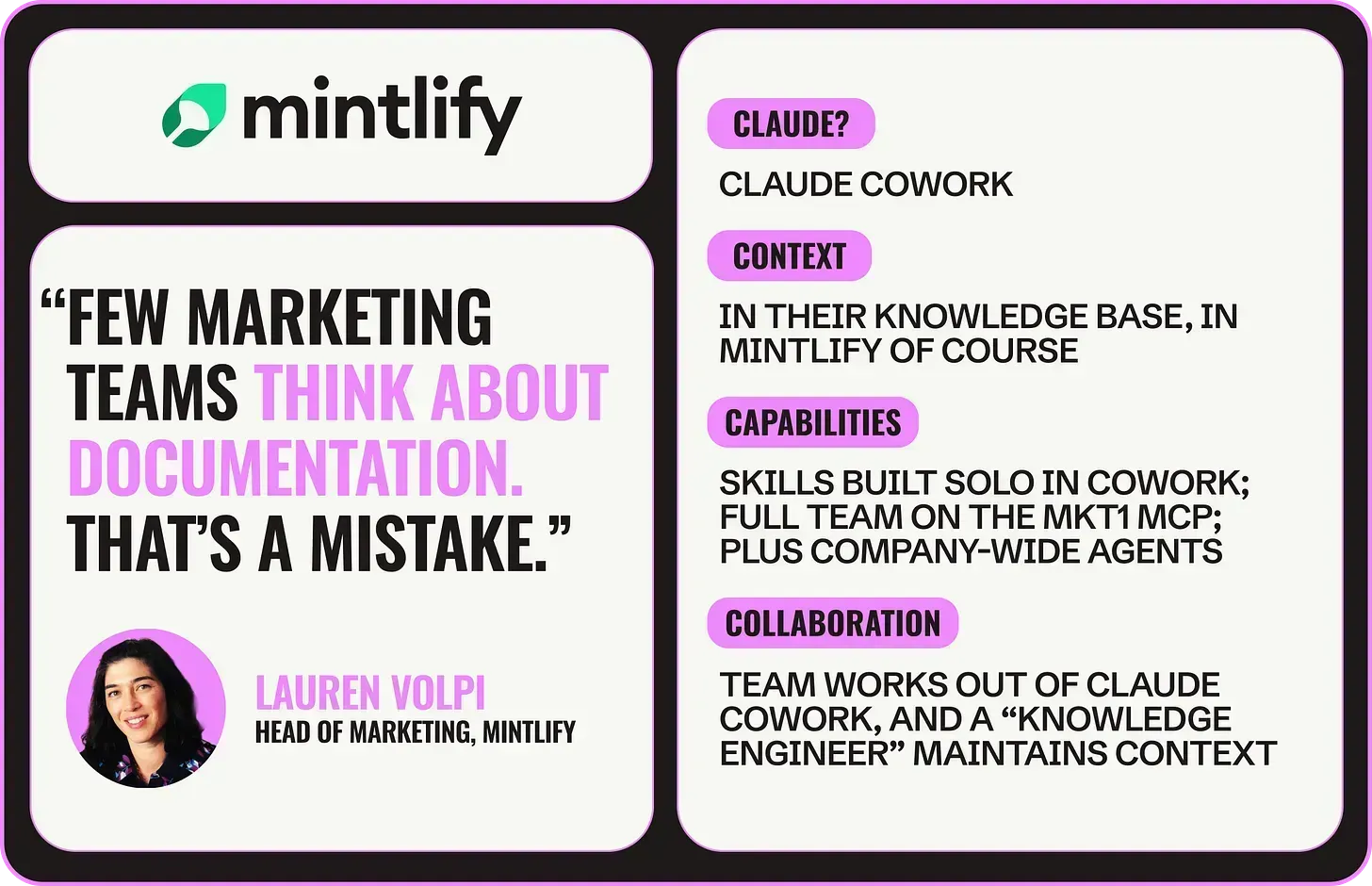
1. Mintlify
Mintlify positions itself as the documentation platform for agents, and that framing is accurate for 2026. It generates self-updating documentation for startups, enterprises, and AI agents, with a design language built around API references and developer portals.
Why it ranks first: Mintlify treats documentation as a machine-consumable product. Its output is optimized for AI agents that read docs to answer technical questions, and its Git-based workflow keeps references aligned with source code. For API-first companies where developers evaluate the docs before the product, this is the closest fit to the category's core promise.
Watch-outs: Pricing scales quickly for larger teams, and the visual editor is less flexible than pure WYSIWYG platforms for non-technical contributors.
2. GitBook
GitBook has evolved from a docs-as-code tool into a central documentation hub. Its 2026 feature set includes bidirectional GitHub and GitLab sync, a visual editor for non-technical contributors, OpenAPI-generated reference pages, and an AI Assistant that embeds outside the docs site.
Why it ranks here: GitBook is one of the few platforms that genuinely serves both engineers writing Markdown and product managers editing in a browser. It publishes an llms.txt file and exposes MCP server analytics so teams can see how AI agents query their documentation. That combination of hybrid collaboration and AI-readiness is hard to match.
Watch-outs: AI output quality depends on how well your content is structured; messy source content produces messy AI answers. For a deeper look at its knowledge layer, see our GitBook review for 2026.
3. Document360
Document360 is an AI-powered enterprise knowledge management platform that covers both customer-facing help centers and internal documentation. Its Eddy AI suite includes AI Search, an AI Writing Agent, an AI Chatbot, a glossary generator, article summarization, duplicate content detection, an MCP server, and SEO automation.
Why it ranks here: Few platforms cover this much ground in one interface. Teams can build help centers, API documentation, SOPs, and user manuals with Markdown or WYSIWYG editors, then layer AI search and chatbot experiences on top. The MCP server is a meaningful signal that Document360 is building for agent consumption, not just human readers.
Watch-outs: Pricing is custom and typically enterprise-oriented, so smaller teams should validate cost early. If you are comparing it against support-focused knowledge bases, our HelpLook vs Document360 comparison breaks down the trade-offs.
4. Guru
Guru describes itself as an AI knowledge platform and "AI Source of Truth" for enterprises. It connects Slack, Microsoft Teams, Google Workspace, Salesforce, and other systems into a single governed, permission-aware knowledge layer, then delivers cited AI answers directly inside existing workflows.
Why it ranks here: Guru's strength is verification. It applies verification workflows and usage-based signals so knowledge accuracy improves over time, and its permission-aware retrieval means answers respect the access rules of the source systems. For internal documentation that spans many tools, this governance model is the differentiator.
Watch-outs: Guru is optimized for internal knowledge rather than public developer documentation, so it is a weaker fit for API-first product teams.
5. Confluence
Atlassian's Confluence remains one of the most widely deployed knowledge platforms in enterprises, and its AI capabilities have matured. It provides real-time editing, access control, version tracking, and deep integration with the broader Atlassian ecosystem.
Why it ranks here: Scale and ecosystem. For organizations already standardized on Jira and Atlassian tooling, Confluence is the lowest-friction way to centralize internal documentation with AI assistance layered on top. Its searchable repository preserves institutional knowledge across teams.
Watch-outs: Public-facing documentation and developer portals are not its strength. Teams often pair Confluence for internal docs with a dedicated platform for external product documentation.
6. Notion
Notion combines note-taking, knowledge base, task management, and database features in a customizable workspace. Pages, templates, and databases let teams structure documentation alongside project tracking.
Why it ranks here: Notion's flexibility makes it a common starting point for startups that need documentation and internal wikis in one place. Its AI features assist with drafting and summarization, and cross-device compatibility keeps distributed teams aligned.
Watch-outs: Version control and structured API documentation are weaker than in docs-as-code platforms. As documentation scales, teams frequently migrate the public-facing portion to a dedicated tool.
7. Bloomfire
Bloomfire's knowledge management platform uses AI to transform information sharing and collaboration. Key features include Enterprise Search, AI-powered Author Assist for content creation, and analytics that measure engagement and impact. Its Ask AI capability accepts natural language questions and returns direct answers sourced from certified company knowledge, including connected sources.
Why it ranks here: Bloomfire's certification model is notable. By distinguishing certified knowledge from general content, it gives AI answers a trust signal that many platforms lack. It supports customer support, research, sales enablement, and knowledge-sharing use cases.
Watch-outs: It is oriented toward internal knowledge sharing more than public documentation products, so developer-facing teams may find it a partial fit.
8. Stonly
Stonly is a knowledge management platform built for customer service. It lets teams create standard articles and step-by-step guides that adapt to each person's situation, with tools to collect feedback, measure impact, and manage knowledge at scale. AI Knowledge Agents help create and update content automatically.
Why it ranks here: Stonly's adaptive, step-by-step format is genuinely different from article-based documentation. For troubleshooting and procedural documentation, it reduces the cognitive load on readers. It integrates with Zendesk, Salesforce, ServiceNow, Slack, WhatsApp, and Freshworks.
Watch-outs: It is optimized for support knowledge rather than API references or developer portals, so it belongs in a support documentation stack rather than replacing a docs platform.
9. KMS Lighthouse
KMS Lighthouse is an enterprise knowledge management SaaS solution that gives employees, agents, and customers real-time access to consistent information. Its patented search engine delivers deterministic answers, with optional GenAI-powered capabilities for context-aware responses across service and sales channels.
Why it ranks here: The deterministic search engine is the standout. In regulated industries where an AI-generated answer is unacceptable without a traceable source, deterministic retrieval provides the consistency and auditability that generative-only systems struggle to guarantee.
Watch-outs: The interface and workflows are built for contact centers and service organizations, so product documentation teams may find it less natural than developer-focused platforms.
10. Archbee
Archbee is designed for documentation and knowledge management, enabling teams to create, organize, and share technical documentation. It supports structured content, API documentation, and collaborative editing within a unified workspace.
Why it ranks here: Archbee occupies a practical middle ground. It offers more structure than a general wiki and more editorial flexibility than a pure docs-as-code tool, which suits product teams that need to publish both internal and external documentation without a heavy engineering dependency.
Watch-outs: Its AI capabilities are less extensive than the top-ranked platforms, so teams prioritizing agent-ready output should weigh that carefully.
How to Choose: A Decision Framework
Top 10 AI Knowledge Platforms for Documentation Products 2026 - How to Choose: A Decision Framework.
Ranking lists only help if they map to your situation. Use these questions to narrow the field:
- Who reads your docs? If AI agents and developers are primary readers, prioritize Mintlify or GitBook. If support agents and customers are primary, Document360 or Stonly fit better.
- Do you need Git workflows? Docs-as-code teams should require bidirectional sync. If your writers never touch a repository, a visual-first platform is faster to adopt.
- How important is governance? Regulated industries should weight permission-aware retrieval and deterministic answers, which favor Guru and KMS Lighthouse.
- What is your content mix? API references, procedural guides, and internal SOPs demand different formats. Few platforms excel at all three.
- Where does support content live? Public documentation and customer self-service are related but distinct. Many teams run a docs platform for product knowledge and a separate knowledge base for support articles — our comparison of HelpLook, HelpDocs, and AI knowledge management software covers that adjacent decision.
Related reading
- Productlane Review 2026: AI Support Built for Linear Teams - Evidence-based Productlane review: support inbox, AI agent, feedback portal, changelog, Linear and GitHub workflows, pricing signals, limits, and fit.
Sources and further reading
- AI knowledge base: 10 best tools & complete guide (2026) - An AI knowledge base uses generative AI to create, organize, and surface accurate information. Learn how it works, key features, benefits, and the best AI knowledge base software for 2026.
- Best Knowledge Management (KM) Software Reviews 2026 | Gartner Peer Insights - Find the top Knowledge Management Software with Gartner. Compare and filter by verified product reviews and choose the software that’s right for your organization.
- The 10 best software documentation tools in 2026 | GitBook Blog - Compare the 10 best software documentation tools in 2026 — covering end-to-end platforms, docs-as-code tools, and API-first solutions. Find the right fit for your team. | 16 Mar, 2026
FAQ
What is an AI knowledge platform for documentation?
It is software that stores, structures, and serves product documentation using AI. Unlike a traditional knowledge base, it uses natural language processing and retrieval-augmented generation to understand questions and return grounded answers, and it often exposes content to AI agents through files like llms.txt or protocols such as MCP.
How is an AI documentation platform different from a traditional knowledge base?
A traditional knowledge base stores and organizes content for manual search. An AI documentation platform interprets intent, retrieves relevant content automatically, generates concise answers, and flags gaps or stale articles. It also serves machine readers, not just humans.
Which platform is best for API documentation?
Mintlify and GitBook are the strongest fits for API-first teams. Both support OpenAPI-generated references and Git-based workflows. ReadMe, Redocly, and Fern are also credible options if API reference generation is your primary need.
Can I use a support knowledge base instead of a documentation platform?
Usually not as a direct replacement. Support knowledge bases such as HelpLook are optimized for customer self-service, FAQs, and help centers, while documentation platforms are built for structured product and developer documentation. Many teams run both, with the docs platform feeding product knowledge and the knowledge base handling support deflection.
Do these platforms work with AI coding assistants?
Increasingly, yes. Platforms that publish llms.txt files or expose MCP servers allow tools like Claude Code and Codex to read and query documentation directly. GitBook and Document360 both ship MCP-related capabilities, and this is becoming a baseline expectation rather than a differentiator.
How should I measure whether an AI documentation platform is working?
Track resolution-focused metrics: self-service ratio, ticket deflection, AI resolution rate, search success rate, content health, and agent productivity. These show whether the platform is improving outcomes rather than just hosting content.
Conclusion
The AI knowledge platform for documentation category in 2026 rewards platforms that treat documentation as a product for both humans and machines. Mintlify leads for agent-ready developer documentation, GitBook leads for hybrid collaboration, and Document360 leads for enterprises that need help centers and internal knowledge in one system. Guru and KMS Lighthouse stand out for governance, while Confluence, Notion, Bloomfire, Stonly, and Archbee each serve narrower but legitimate roles.
The right choice depends less on feature counts and more on who reads your documentation, how your writers work, and how much governance your industry demands. Start with those three questions, then validate pricing and integrations against your actual workflow. If your team also needs a customer-facing self-service layer, evaluate that separately — the documentation platform and the support knowledge base solve different problems, and the best stacks use both deliberately.
For a broader view of how documentation and training platforms overlap, see our Top 10 AI documentation and training platforms for 2026.